
Kids Need Essays
Responding to a Stupid Claim from an Intelligent Man

Education has a bad reputation. Deservedly so. There is so much that needs to be improved. More than anything, it is often not prioritized, and if you look around, the effects of that are obvious.
Yes, I might be calling the average person intellectually challenged.
Everyone has an opinion about education and about how it can improve. Everyone identifies things that are truly important and things that should be cut in order for education to actually help people with their “real lives.”
Some people might have incentives to make claims that sound reasonable on the surface level but are actually nothing but absurd once you think them through. It is to their advantage that many people will not think them through. Some people don’t tend to think. It’s unfortunate.
And kinda sad.
Nothing pisses me off more than an intellectual-sounding claim that masks the stupidity behind the claim itself. Use enough buzz words and people might think you have a point.
Even when you absolutely do not have a point.
This is amplified when people defend the usage of AI in early K-12 education. To be transparent, I do not think AI should be implemented until a kid or teenager has learned how to think and process information themselves. I am not a Luddite, and I acknowledge that there may be use for it later on, especially in higher education.
Regardless of any individual opinions on AI, the cat is out of the bag.
According to Stanford’s website, Victor R. Lee “is an Associate Professor in the Graduate School of Education at Stanford University and is faculty lead for the Stanford Accelerator for Learning’s initiative on AI and Education.”
I do not doubt that he is a smart, capable, and qualified man. However, when your position literally is leading an initiative on AI and Education, it might lead you to put the cart before the horse. You are starting with the assumption that AI is useful in education. It’s your title and position, and you get paid for holding those positions. I could easily defend AI in education if someone were paying me to do so.
No one is, though, so I won’t.
I want to react to something he said because I don’t think the statement makes much sense. Maybe he usually says smart things; in my opinion, this particular statement was lacking.
In the New Scientist magazine’s issue on the AI Revolution, they quote Victor R. Lee:
“Victor Lee at Stanford University in California says there is an opportunity to refocus how we assess learning away from the ability to produce well-written essays towards ‘more sophisticated things like comparison, critique, adaptation, refinement.’”
What does Victor Lee think an essay is? He literally just described an essay. I mean, although this is a casual essay and I am speaking casually right now, am I not in this current moment critiquing his ideas?
Have I not written essays comparing different ideas, refining different ideas, adapting different ideas?
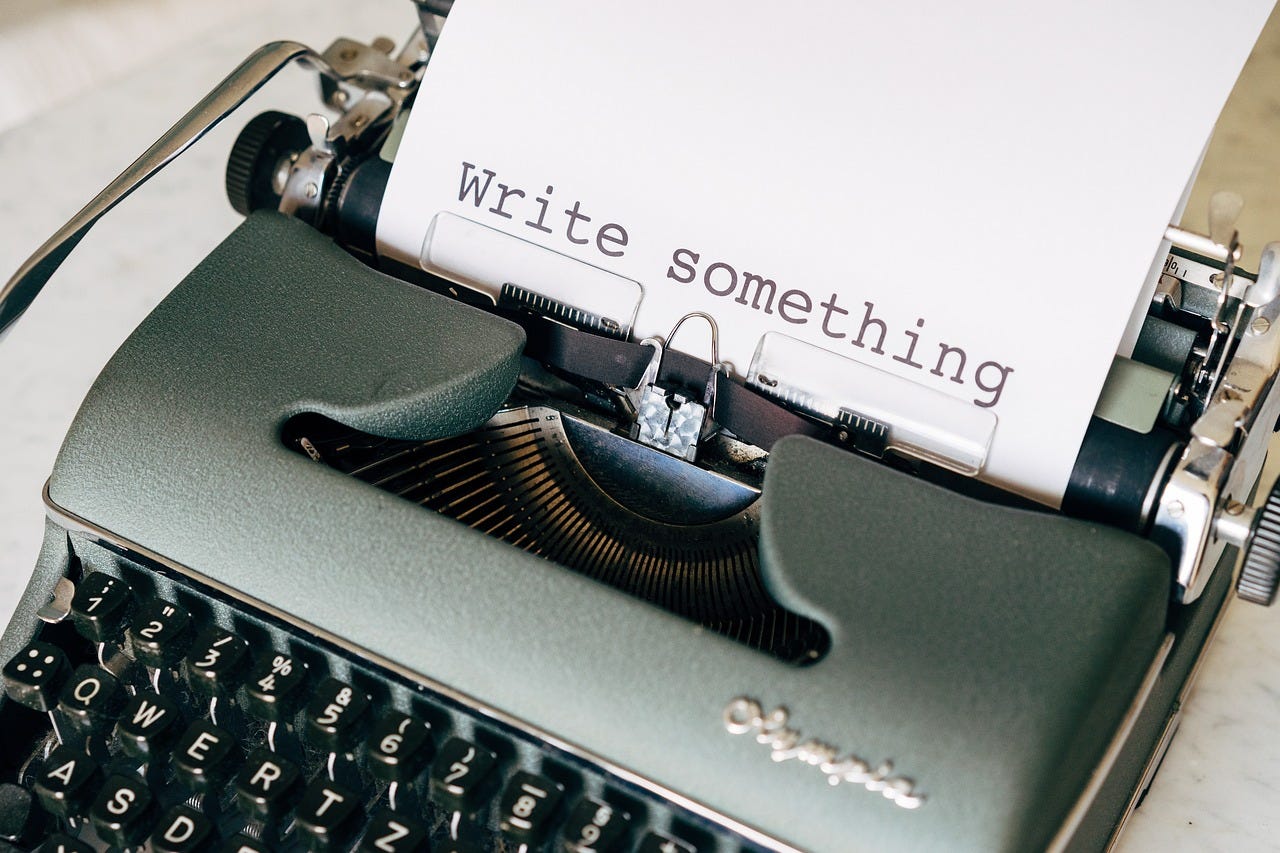
I think this goes over well on the surface level because of how many teachers in the previous and current generation taught the essay. When you have too many students in a room, there is a tendency to make them all stick to a strict formula. The student feels like he is sharing his thoughts and writing an essay in a straitjacket. The thesis must go here, the first claim must go here, the evidence for the claim must immediately follow it.
I don’t blame teachers. Their course load is way too heavy to allow any sense of individuality before young children and teenagers master the basics.
In its true and evolved form, the essay is the place to think critically. It is the place to have kids challenge ideas and defend opinions. It is the place to interact with ideas that came before yours and continue an intelligent conversation. It is a training space for critical thinking, and if taken seriously and taught well, it is critical thinking’s best vessel.
So of course many people realize that AI is a threat to the essay. I imagine he realizes that as well. Since he is positioned to imagine a world with AI taking center stage in education, he needs to demean and diminish the tool that has sparked creative and critical thinking in the human race for generations.
He insinuates it never did that. We were just all following strict and meaningless conventions in straitjackets.
When I worked as a Teaching Assistant for a course that taught college freshmen, and when I worked as a 10th grade teacher, the essay was everything. It got kids thinking, it started class conversations, it made kids feel like I was actually listening to and engaging with their ideas. Of course some did not take advantage, but others did, and those that did legitimately became smarter people. They are probably the people who could use AI and remain skeptical when it hallucinates, mainly because they learned to think first.
If I were in a conversation with him as someone who taught critical thinking in high school — partially through writing — I would ask him what the alternative is.
He says he wants something that teaches “comparison, critique, adaptation, refinement.”
That sounds like an essay.
Kids need essays, or something like essays, and until you give me a usable alternative, I think that AI is a threat to education because it is a threat to the essay.
The article that quoted him suggested that kids could sit on the computer and debate bots. I’m not sure that is the alternative I would want young children and teenagers to use.
Every time I’ve debated a bot, it immediately caves and strokes my ego.
First, I have read the comments below & I will be addressing those as well as my own inputs on your ESSAY.
Yes, I am an oldster. I have never married, nor do I have children. However, should I be a young parent with a child, I would only allow them a flip phone (snapping them closed is so satisfying). . I still think that the best way to get students to perform well in school is to have involved parents.
I was born in '62, so I grew up learning card catalogs & bibliographies. I can remember my Mom showing me how to read, sound out words (she did have a bachelor's degree in Classics...& while she was all about the Latin, in later years [my second degree] I was much more inclined towards the Ancient Greek).
Regardless, as far as classrooms are concerned, I would remove all tech, as a number of studies have shown that there has been a cognitive decline in the last few decades. Indeed, there have been other studies that have shown writing essays (especially in long hand) are much better for the student. It is interesting that I am reading this essay now, the same day this article came out: ( https://www.psychologytoday.com/us/blog/the-architecture-of-identity/202603/why-handwriting-is-better-for-your-brain-than-typing/amp ).
I could go on...such as how I, a career bachelor, could have opinions on the education of the younger generations. To this I say that, I live in the community of humanity. So the responsibility of how the next generation not only resides upon the parents, but those of us in the wider society.
Also, I am no Luddite. I have recently upgraded my Microslop Windows 10 laptop. Adding more RAM & switching to Linux. After all...my Dad work for IBM, & our first computer was an Atari (way back when).
As always, I found this to be a nuanced & inciteful ESSAY. I have to admit I am torn between which I like better...your writing or your videos. I'm sure I'll have an informed opinion by the end of the year.
I'm not as hostile to the teaching AI use relatively early. Kids are going to use it outside the classroom so I think they should be taught how to check its sources and effectively prompt it in the same way I was taught how to use a search engine and how to evaluate the potential biases and accuracy of a source.
But the idea that it should be used to replace essays planned and written by kids is insane. Essays are what enables us to record our thoughts, construct arguments, and see how the pieces of arguments work together. It literally enables us to have more complex thoughts than we could if we relied on our memories. When I want to clarify my thinking about something, I sit down and write an essay.